Paolas Symbiotic Aquaculture PSA PAOLAS SYMBIOTIC AQUACULTURE
Paolas Symbiotic Aquaculture, LLC emblem
LONG ISLAND, NEW YORK

Aquaculture engineering, hatchery development and technical training. Long Island, New York.

Fifteen years of commercial production in the Dominican Republic. Now building striped bass hatchery capacity for the waters of Suffolk County.

Where we are today →
STATUS

Where we are today

Paolas Symbiotic Aquaculture does not yet produce fish on Long Island. We think you should know that from the first page.

What we sell today is knowledge: technical consulting, engineering and training, built on fifteen years of commercial aquaculture in the Dominican Republic.

What we are building is hatchery capacity for striped bass in Suffolk County. Here is exactly where that stands.

  1. PHASE 1 Technical documentation Writing the operational manual for Morone saxatilis, from broodstock to grow-out.
  2. PHASE 2 Seeking local field experience Actively looking for volunteer work with Suffolk County shellfish and finfish programs, and for the chance to work alongside established Long Island operations. We hold no position with any of them today.
  3. PHASE 3 Pilot hatchery Site, permits, broodstock and larviculture protocol.
  4. PHASE 4 Seed production For growers and for public restoration programs.
  5. PHASE 5 Grow-out Commercial production of market-size fish.

We publish no dates we cannot keep.

THE SPECIES WE HAVE CHOSEN

Striped bass — Morone saxatilis

Morone saxatilis × M. chrysops

Striped bass came back to this coast because people decided it would. It is the great recovery story of American fisheries, and it is the species we have chosen.

It is also one of the hardest. Hybrid striped bass (Morone saxatilis × M. chrysops) does not reproduce on its own: it requires broodstock of both species and induced spawning. The larvae hatch at around two millimeters, with a narrow first-feeding window on rotifers and Artemia, and strong cannibalism that demands constant grading.

That difficulty is the reason this work matters. Most of the primary literature on culturing this species in cold northern waters dates from the 1970s and has never been rewritten for the people who actually run the ponds. That is the gap we are trying to close.

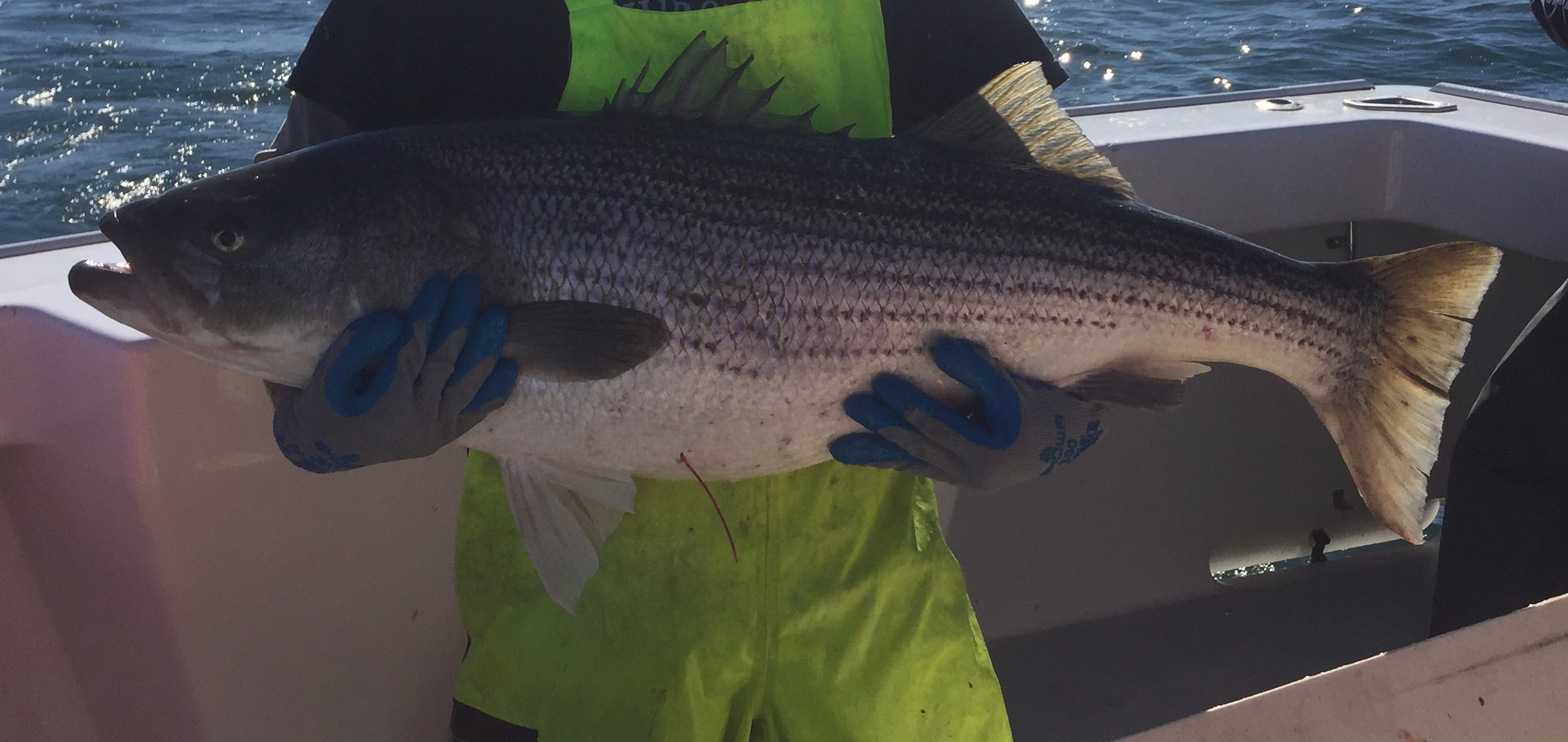
Wild striped bass tagged under the USFWS Cooperative Coastwide Striped Bass Tagging Program. Photo: USFWS, public domain.
Wild striped bass tagged under the USFWS Cooperative Coastwide Striped Bass Tagging Program — the monitoring effort behind the recovery. Photo: USFWS, public domain.
TEMPERATURE 20–27 °C
SALINITY 0–15 ppt
pH 7.0–8.5
DISSOLVED OXYGEN > 5.0 mg/L

Long Island water does not hold these temperatures year-round. That gap is the engineering problem, and it is the reason a hatchery here has to be a controlled recirculating system rather than a pond. Closing that gap is the work.

Culture parameters compiled from the primary literature and from our own pond experience with warm-water species. They are the working targets of the manual under development, not results from a Long Island facility.

CONTEXT

Why Long Island

In 1976, Great South Bay produced 700,000 bushels of hard clams — roughly 93% of New York State's entire harvest. By 1980 it was 340,000. In 2012, the whole bay produced 3,368 bushels.

In the Peconics, brown tide nearly erased the bay scallop. Cornell Cooperative Extension, Long Island University and Suffolk County planted more than eight million hatchery scallops to bring it back. It worked, until the mass die-offs began in 2019.

The menhaden factories at Promised Land closed in the sixties because there were no fish left to process.

Every one of these species is a filter or a regenerator. These bays did not only lose a harvest — they lost the machinery that kept them clean.

Hatcheries are how that machinery gets rebuilt. That is the work we want to do here.
TRACK RECORD

Proven production — Dominican Republic

Six species we have farmed commercially, in symbiotic and recirculating systems.

Every photograph in this section was taken at our operations in the Dominican Republic. None of them shows a Long Island site.

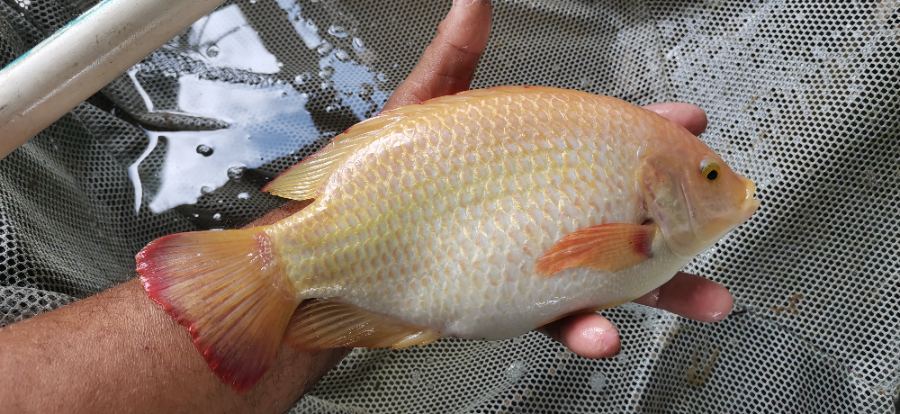
Dominican Republic — Oreochromis niloticus grow-out in a symbiotic system.

Dominican Republic — Oreochromis niloticus grow-out in a symbiotic system.

Nile Tilapia

Oreochromis niloticus

High-yield intensive production with excellent feed conversion in fresh and brackish water.

Symbiotic technology Culture data →
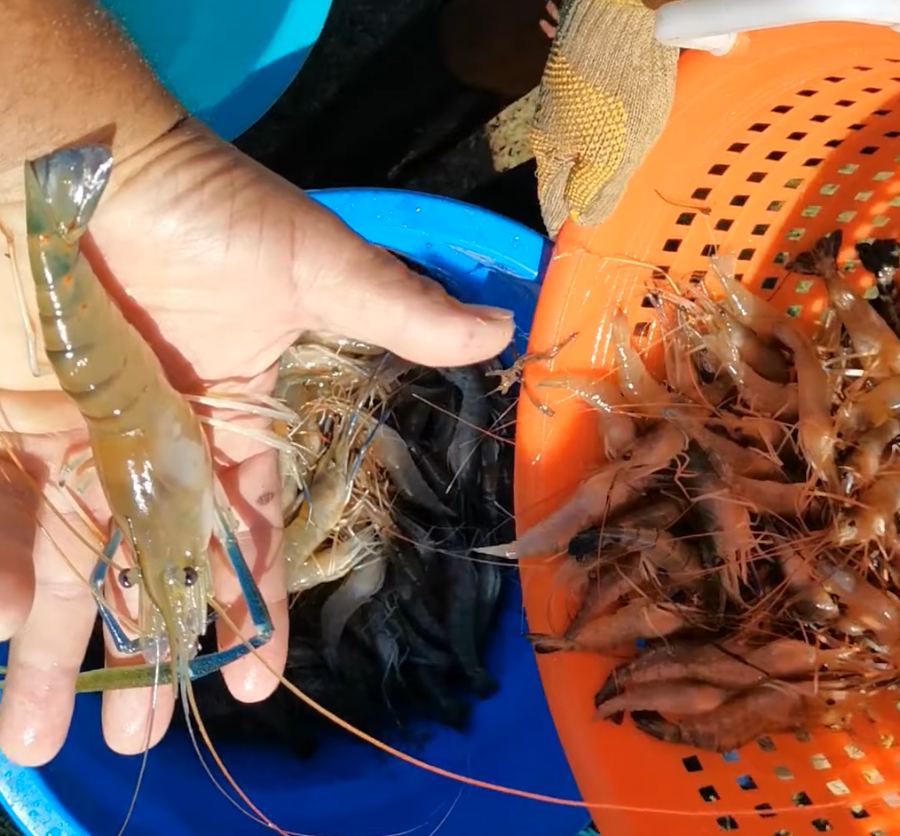
Dominican Republic — Macrobrachium rosenbergii grow-out ponds.

Dominican Republic — Macrobrachium rosenbergii grow-out ponds.

Giant Freshwater Prawn

Macrobrachium rosenbergii

Benthic tropical crustacean farmed in enriched-bottom systems under strict water quality control.

Symbiotic technology Culture data →
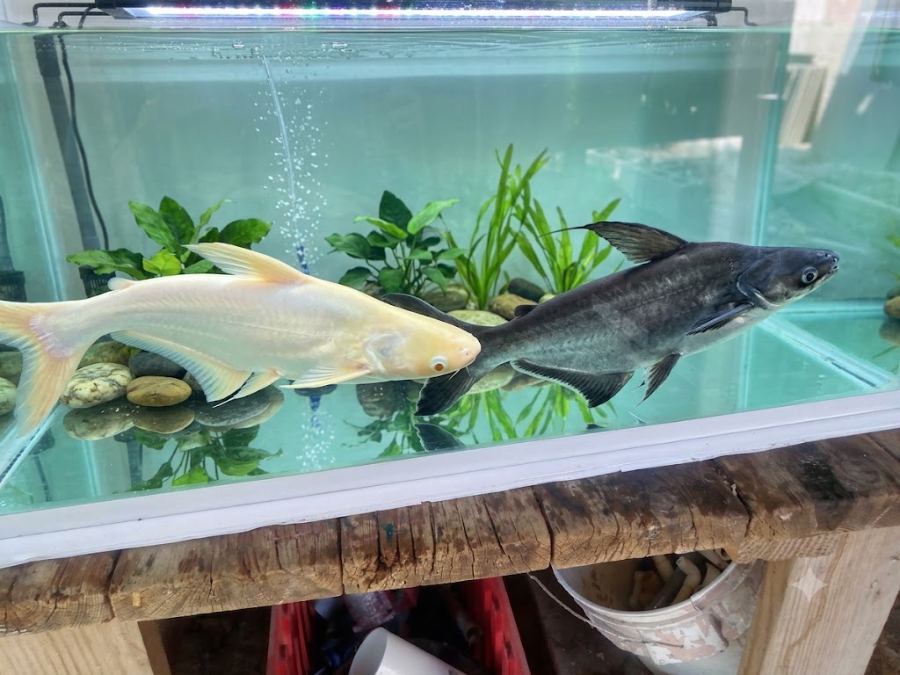
Dominican Republic — Pangasianodon hypophthalmus in a recirculating system.

Dominican Republic — Pangasianodon hypophthalmus in a recirculating system.

Pangassius / Basa

Pangasianodon hypophthalmus

Fast-growing fish in closed recirculating systems, with high tolerance to elevated densities.

RAS systems Culture data →
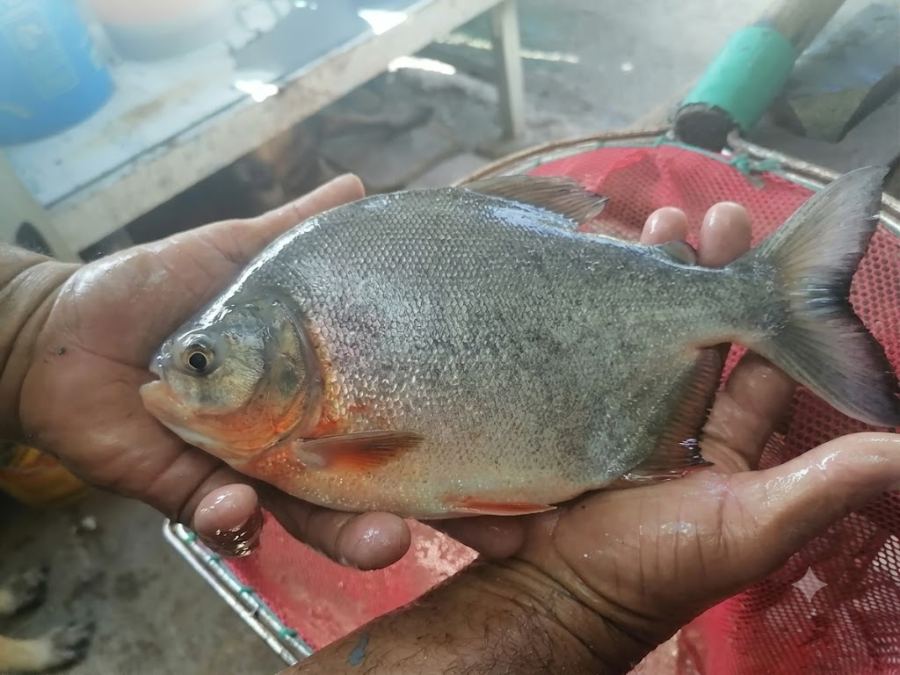
Dominican Republic — Piaractus brachypomus in aquaponic integration.

Dominican Republic — Piaractus brachypomus in aquaponic integration.

Pacu / Cachama

Piaractus brachypomus

Tropical omnivorous species integrated with vegetable crops in symbiotic systems.

Aquaponics Culture data →
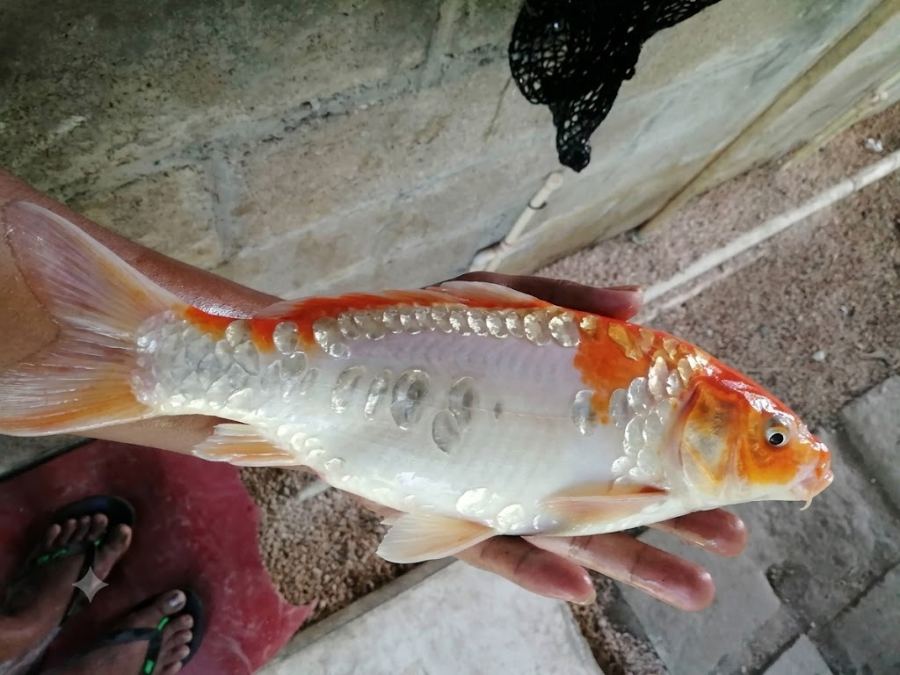
Dominican Republic — mirror carp and grass carp in polyculture.

Dominican Republic — mirror carp and grass carp in polyculture.

Mirror Carp & Grass Carp

Cyprinus carpio var. specularis / Ctenopharyngodon idella

Hardy cyprinid species with excellent plant-biomass utilization and biological control.

Symbiotic technology Culture data →
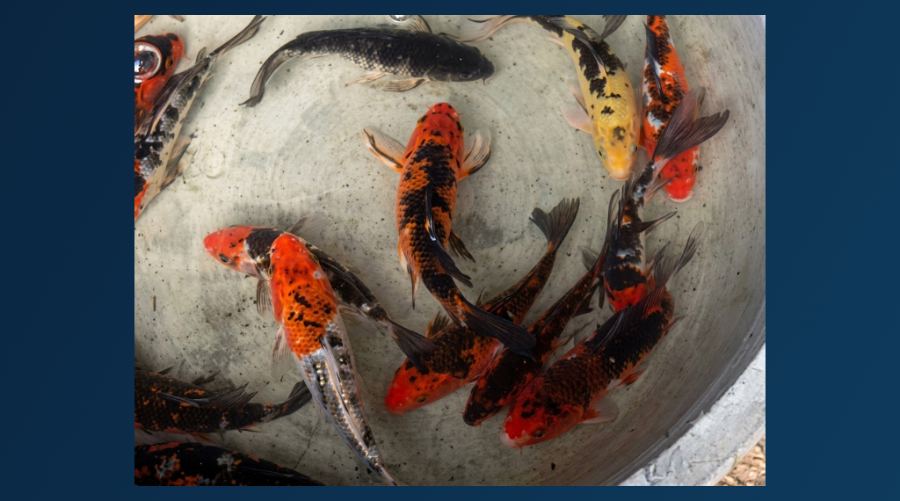
Dominican Republic — ornamental Cyprinus carpio (koi) culture.

Dominican Republic — ornamental Cyprinus carpio (koi) culture.

Koi

Cyprinus carpio

Ornamental farming in symbiotic systems with aquaponic integration.

Aquaponics Culture data →
LONG-TERM INTEREST

Integrated multitrophic aquaculture for Long Island

Our long-term interest is integrated multitrophic aquaculture: finfish, shellfish and seaweed in one system, where the waste of one species is the input of another. Eastern oyster, bay scallop, hard clam and sugar kelp all belong in that picture for Suffolk County.

We are not producing any of them today. We say so because it is true.

LEADERSHIP

César Ramdy Guerrero

PAOLAS SYMBIOTIC AQUACULTURE, LLC is led by César Ramdy Guerrero, Civil Engineer, with forty years of construction and industrial plant management in the Dominican Republic and Haiti, and fifteen years in symbiotic multitrophic aquaculture.

ASSOCIATION

Vice President, Asociación Dominicana de Acuacultores (ADOA), 2020–2025.

CONGRESS

Delivered the opening welcome address at CONADOA 2022, the first National Aquaculture Congress of the Dominican Republic, held with CEDAF — a program that included Prof. Yoram Avnimelech, Dr. Alejandro Flores (FAO) and Dr. Megan Davis (Florida Atlantic University / Harbor Branch).

TRAINING

Diploma in Aquaculture 4.0, 336 hours, Universidad Técnica de Machala (UTMACH), Ecuador, 2024.

PRODUCTION

Technical advisor, TILMAX — 3,500 m² grow-out ponds, harvest peaks of 8,000–10,000 lb in a single day.

ENGINEERING

Chief Resident Engineer, Cathedral of La Vega Real, 1988–1990.

Official congress program, for verification: CONADOA 2022 — CEDAF

DOMINICAN REPUBLIC · 2020 — 2024

Teaching record

2020 — 2024

Monthly aquaculture training program

Online, with practical sessions on working farms in the Dominican Republic

Instructor

Monthly program for students across Latin America and the United States.

Focus Tilapia culture, water quality management, infrastructure, culture technologies (RAS, symbiotic)
Education program with Ing. Edwin Reyes and Aquilino Chireno.
2022

1er Congreso de Acuicultura CONADOA

CEDAF, Santo Domingo

Speaker

Delivered the congress welcome address as Vice-President of the Asociación Dominicana de Acuacultores (ADOA).

Focus National aquaculture policy and development
CONADOA 2022 — CEDAF ↗
Oct 2023

Bioaquafloc technical course

Piscicultura Eco Sostenible Chireno, Dominican Republic

Organizer · Practical instructor

Organized the course and took part in the hands-on field sessions. The lectures were given by Dr. David Celdrán Sabater and his BAF team, Ing. Edwin Reyes, Dr. Francisco de la Rosa, among others.

Focus Bioaquafloc technology
Host's public course gallery
COMMERCIAL

Academy & Services

This is what you can hire or buy from us today: technical consulting, engineering, training and digital manuals. Everything here is delivered remotely.

CONSULTING

Aquaculture technical consultation

One-on-one advisory on water quality, aeration, biosecurity, stocking densities and production management. Video call with written follow-up.

$180 / hour
Delivery: Scheduled within 3 business days Request payment link
DIAGNOSTIC

Project diagnostic session

Two hours analysing your operation or project, plus a written technical report with findings, risks and a prioritized action plan.

$450 / session
Delivery: Report within 5 business days Request payment link
CONSULTING

Full-day advisory

A full day dedicated to your operation: comprehensive review, protocol adjustments and direct training for your technical team.

$1,200 / day
Delivery: Scheduled within 10 business days Request payment link
RETAINER

Monthly advisory retainer

Eight monthly hours of technical availability: parameter monitoring, incident resolution and ongoing management adjustments.

$1,250 / month
Delivery: Immediate start Request payment link
TRAINING

Custom technical training

Four hours of training designed for your team or producer group, with technical material and calculation spreadsheets included.

$850 / group
Delivery: Scheduled within 10 business days Request payment link
DIGITAL MANUAL

Technical manual: striped bass

Morone saxatilis culture manual: biology, facilities, water quality, feeding, health management and harvest. PDF. Under active development; buyers receive revisions at no cost.

$47 / download
Delivery: Download by link Request payment link
BUNDLE

Manual + consulting hour

The complete technical manual plus one hour of personalized advisory to apply it to your specific project.

$199 / bundle
Delivery: Manual by link · call by appointment Request payment link
ENGINEERING

System design & engineering

RAS, symbiotic and aquaponic system design tailored to your site, species, climate and budget. Scope defines price.

Custom quote
Delivery: Initial consultation at no cost Request a consultation
DIGITAL COURSE · SOLD BY HOTMART

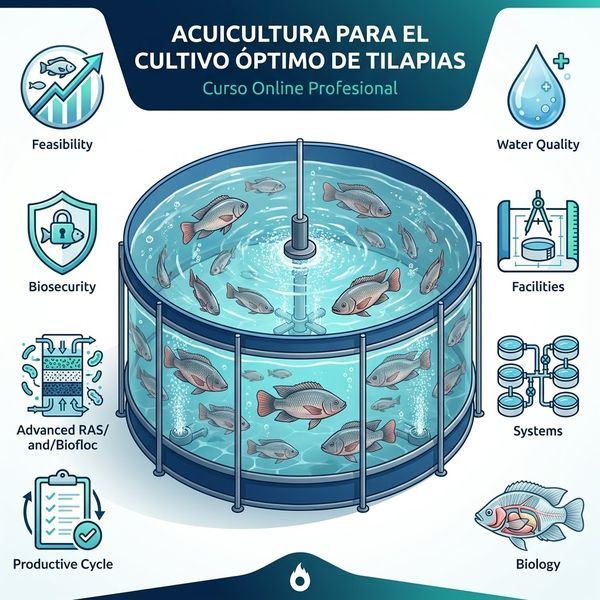
Aquaculture for Optimal Tilapia Farming

Instructor: César Ramdy Guerrero — CEO, PSA LLC

  • · Video modules
  • · Hydraulic calculation spreadsheets
  • · Technical PDF manuals
  • · Lifetime access

Sold and delivered by Hotmart, which acts as merchant of record for this course. This purchase is not processed on paolassymbiotic.com. Links to Hotmart are affiliate links.

Cover of the tilapia farming course, hosted on Hotmart.
$67 USD
Enroll on Hotmart Payment and 7-day guarantee handled by Hotmart.
FREE RESOURCE

Aquaculture calculators — circular ponds, biometrics and water quality

Three working spreadsheets: circular pond volume and stocking density with aeration-support check, biometric sampling with biomass projection, and a water-quality reference table for tilapia in biofloc systems.

Free. English and Spanish. We email you the file plus occasional field-tested updates — no spam, unsubscribe anytime. Questions: [email protected]

No payment data is ever entered on this website. Services and manuals are invoiced and paid through an external payment link; the digital course is paid on Hotmart. This site has no card fields of any kind.

CONTACT

Talk to us directly

Legal entity, mailing address, business line and corporate email of the company that operates this website.

LEGAL ENTITY

PAOLAS SYMBIOTIC AQUACULTURE, LLC

New York State Domestic LLC — formed May 26, 2026

Mailing address:
83 S Ocean Ave, Unit #576
Patchogue, NY 11772, United States

This is a mailing address only. PSA operates no production facility, farm or hatchery at this or any other Long Island location.

DIRECT CONTACT BUSINESS LINE (631) 515-7272 [email protected] linkedin.com/in/ramdyguerrero

Monday to Friday, 8:00 AM – 6:00 PM (Eastern Time).

SCOPE OF WORK

Consulting, engineering and training, delivered remotely worldwide. Striped bass hatchery development is in progress in Suffolk County, New York.

Registered agent: 418 Broadway, STE N, Albany, NY 12207, USA